How Permanent Outdoor Lights Are Installed: Soffit Lighting Explained
Most homeowners ask what permanent outdoor lighting looks like when it is done. Fewer ask what actually happens during installation, which is a reasonable gap because the finished result hides almost all of the work. If you are considering permanent LED lighting for your home, understanding the process helps set realistic expectations, tells you what to prepare for on the day, and explains why a quality install holds up through Alberta’s particular version of outdoor conditions.
What the system consists of before anyone arrives
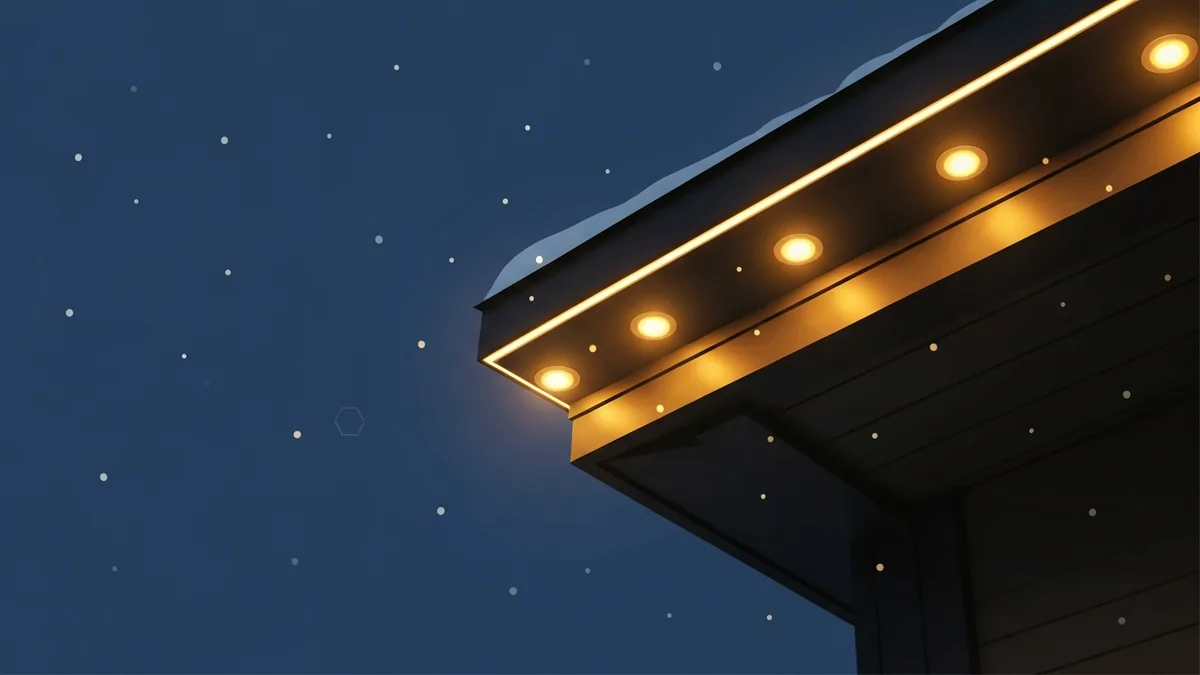
A permanent outdoor LED system is built around a low-profile aluminum channel that runs along your roofline, typically at the eave or fascia line. Inside that channel sits a continuous LED strip, with individual pixel points spaced at regular intervals. The channel protects the electronics and gives the fixture its flush-mounted appearance. From the street, you see a thin line of colour rather than visible bulbs or exposed hardware.
At the HomeOne standard that AlwaysLit installs, the components arrive in sections sized to the job. The installer measures the linear footage during the quoting visit, and the channel either arrives pre-cut or is trimmed on site to fit your specific roofline. The controller, a small hub that connects the system to your home network, comes with the kit and is installed on the same day.
How the channel attaches to your roofline
The installation crew works from extension ladders or scaffolding depending on the roofline height. Most Calgary and Airdrie homes are one or two storeys, which standard ladders handle without issue. A handful of properties in communities like Springbank or Bearspaw have larger footprints or steeper rooflines that require more time and care to access safely.
The aluminum channel is fastened directly to the soffit or fascia. The exact method depends on your home’s construction. Most Calgary-area homes built in the last three decades use a vinyl or aluminum soffit system, and the channel attaches using screws driven into the soffit framing behind it. Older homes in neighbourhoods like Capitol Hill or Rosedale sometimes have wood soffits, which hold fasteners differently but are generally straightforward to work with.
The flush-mount design is not just cosmetic. The channel sits tight against the surface rather than projecting outward. In Calgary, snow sliding off a roof during a chinook thaw is a common occurrence from November through April, and a protruding fixture catches that falling snow in ways a flush-mounted channel does not. A properly installed system sits below the eave drip line, so snow and ice pass in front of the channel rather than landing on it.
The crew runs channel continuously around the sections of roofline being covered. Most installs cover the front face and some portion of the sides. Full perimeter installs are common on corner lots or homes where the backyard patio gets used year-round for entertaining. What is included depends on the scope you agree on during quoting.
How the wiring is handled
The wiring runs inside the soffit cavity, which keeps it protected from weather and out of sight. This part of the install is time-consuming and requires drilling small access holes at intervals to route wiring from section to section. On homes with finished soffits, the installer works carefully to keep penetrations tidy and to use existing soffit vents or panel seams as routing points where possible.
Power comes from a dedicated circuit or from an existing exterior outlet, depending on the system load and what is available at your home. The fixtures themselves run at low voltage, but the controller needs a reliable power source. If your exterior electrical situation needs work before the install, that comes up during the site visit. Electrical work is a separate trade, so it is worth sorting out any known issues ahead of booking the install day.
All wiring connections are made inside the protected soffit space or within sealed junction points built into the channel system. Calgary’s freeze-thaw cycles are one of the reasons this matters. A chinook event in January can push temperatures from minus 20 to plus 10 within a day or two, then drop them again. Exposed connections experience that thermal swing repeatedly through a single winter, and moisture works into unsealed joints over time. A properly done install keeps every connection either inside the soffit or sealed within the channel itself, which is what lets the system run reliably for years in Alberta’s climate.
The controller and app setup
Once the channel and wiring are in place, the installer connects the controller and commissions the system. This involves connecting the controller to your home’s Wi-Fi network and pairing it with the HomeOne app on your phone. The app is how you control everything afterward: setting colours, programming schedules, and triggering scenes for specific occasions.
The setup process includes testing every section of the roofline to confirm all LEDs are responding correctly and that there are no dead zones. On a typical two-storey home, this takes less than half an hour. Larger properties with more linear footage take longer.
Once the system is tested and the app is working, the installer walks you through the basics. How to set a scene. How to schedule a recurring program for something like a Flames game night or Canada Day. How to trigger a specific colour manually. The walkthrough is short but it means you leave install day knowing how to use what is on your home, rather than figuring it out later.
How long installation takes
For a typical single-storey Calgary bungalow, the install runs three to five hours including setup and testing. A standard two-storey with front and side coverage usually runs five to eight hours. Full perimeter installs on larger homes or homes with more complex rooflines can take a full day or modestly more.
Weather plays a real role in scheduling. Calgary installers work in a range of conditions, but installation in freezing temperatures or on icy surfaces is both a safety issue and a quality issue. Adhesives and sealants used in the install process have temperature minimums, and working on cold, potentially icy soffits carries obvious risks. Most installs are scheduled from late spring through fall, when temperatures are reliably above zero and surfaces are dry.
Fall books up fast because homeowners want the system in before Christmas. If you are thinking about having lights for this coming holiday season, booking earlier in summer gives you better flexibility on scheduling and a less rushed install experience. Cochrane and Okotoks-area homeowners should plan the same way since most installers cover the region but schedule fills in roughly the same pattern.
What to expect when the crew leaves
When the install is done, the home looks essentially the same during the day. The channel is visible if you look for it, but it is low-profile enough that it is not a dominant visual element in daylight. The real impression comes at night.
The first evening after install is when most homeowners get a clear sense of what they have. The system can run the full colour spectrum, including whites in a range of temperatures from warm to cool. For everyday use, a warm white tends to work well as ambient accent lighting along the eave line, and then colour scenes get used for specific occasions, hockey nights, long weekends, holidays, and the occasional backyard gathering.
After that, maintenance is minimal. There is nothing to take down in January, nothing to store, and nothing to reinstall next November. If a section fails at some point, which is uncommon but does happen, the channel design makes replacement of individual sections straightforward rather than requiring a full reinstall.
For a realistic sense of what the installed cost looks like for homes in the Calgary area, the permanent lighting cost guide covers ranges by home size and what drives the price up or down. The Calgary service page has detail on coverage areas and what the site visit and quoting process looks like if you want to get an actual number for your home.